LIVE WORKSHOP · HOSTED BY ALLAN SENDAGI
Make AI Work
You Are Using AI. Do You Actually Know What's Changing?
Bring one real business task.
Leave with a defined AI intervention and the metrics to prove it works.
Join The Launch Cohort1
LIVE WORKSHOP
2.5
HOURS
7
AI TASK ELEMENTS
1+
COMPLETED CANVAS
10
PARTICIPANTS
THIS IS FOR YOU IF...
What you walk
away with.
Not another list of AI ideas. A defined starting point for putting AI to work.
One real business task
Clearly scoped and ready to work on.
One completed AI Task Canvas
Mapping the action, prediction, judgment, inputs, training data, feedback, and outcome.
A defined role for AI
What AI should do, what it should not do, and where human judgment remains.
A measurable outcome
How you will know whether the intervention actually improves the work.
A next step
What to test, with what data, and what to measure.
A build-ready specification
Precise enough to brief a developer, vendor, or AI coding agent — without losing the business intent between strategy and build.
THE AI TASK CANVAS
7 elements.
One session.
Every element forces one more decision you can't leave undefined — what AI should predict, what data it needs, where human judgment remains, and how you'll know it worked. You leave with all seven answered for your own task.
The Canvas combines the strategic and development decisions needed to define an AI intervention.
ELEMENT 1
Action
The higher-level business activity this AI task supports.
e.g. "Send personalized follow-up messages after appointments."
ELEMENT 2
Prediction
The exact prediction, classification, or forecast the AI needs to make.
e.g. "Predict the likelihood a customer leaves feedback without a reminder."
ELEMENT 3
Judgment
The value of each outcome, the cost of each error, and the decision rule that follows.
e.g. "Send a reminder if predicted feedback likelihood is under 40%."
ELEMENT 4
Input
The real-time data the AI needs at the moment it makes the prediction.
e.g. "Customer ID, last visit date, service type, feedback history."
ELEMENT 5
Training Data
The historical data needed to build, configure, or evaluate the AI's prediction.
e.g. "Past appointments, whether feedback was left, reminders sent."
ELEMENT 6
Feedback
How the system learns from real outcomes to improve future predictions.
e.g. "Track whether reminder recipients actually left feedback."
ELEMENT 7
Outcome
The measurable result that tells you whether the task is actually creating value.
e.g. "Increase feedback completion rate without increasing reminder volume."
THE OUTPUT
One task. Seven decisions.
The AI Task Canvas turns a vague AI opportunity into a specification for what the intervention should do, what it requires, and how its value will be measured.
This is the artifact you leave with.
FROM HIGH POTENTIAL TO HIGH CLARITY
You start with a business task. The Canvas forces the decisions that turn it into something that can actually be built, tested, and measured.
STRATEGY ↔ AI TASK CANVAS ↔ DEVELOPMENT
SESSION BREAKDOWN
LAUNCH COHORT PRICING
The first live cohort of AI Value / Sandbox
10 Participants · 1 Working Session
QAR 550
≈ AED 554
Saturday, October 3 · 10:00 AM Doha (GMT+3) / 11:00 AM Dubai (GMT+4) · 2.5 hours · Live online
Limited to 10 seats so I can work on your actual task with you, not a hypothetical one. This is a working session, not a webinar.
- →Live 2.5-hour workshop
- →AI Task Canvas
- →Defined AI intervention
- →Measurable value hypothesis
- →Direct working feedback
- →Completed Canvas
- →Clear next step
10 participants maximum. Launch cohort pricing applies to this cohort.
Not sure your task is a fit? Message me on WhatsApp and I'll tell you.
What you'll need: One real business task to work on. No technical background required.
YOUR HOST & INSTRUCTOR
Allan Sendagi
AUTHOR, THE AI ROADMAP · FOUNDER, SAFEHAVEN AI · BUILDER, NOMOS PROTOCOL
Allan Sendagi is the author of The AI Roadmap: Implement AI Profitably in 10 Steps and creator of the AI Navigator System, the methodology behind the AI Task Canvas used in this workshop.
He founded SafeHaven AI and co-founded Shapr, an applied AI agency based in Dubai. At SafeHaven, he built NOMOS Protocol, an infrastructure specification for machine-verifiable institutional authority (how an organisation can prove an AI acted within the authority it was given), and developed Computable Authority, a proposed runtime architecture for binding institutional authority to machine-executed action, put forward through the OECD's 2026 public consultation on Law as Code.
This workshop is the front end of that work. Before AI can be trusted with a decision, someone has to define exactly what it should decide, with what information, and how its results will be judged. That's what you'll do here, for one task of your own.

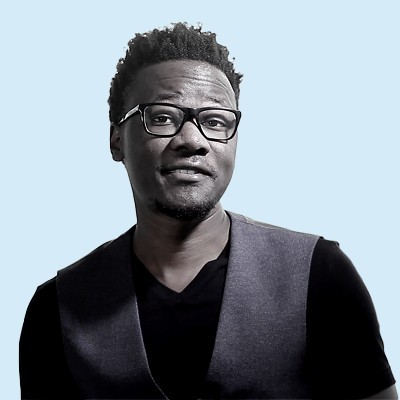
WHAT OTHERS SEE IN THE FRAMEWORK
“A clear, real-world framework that bridges strategy and execution.”
Akmaral Shamenova
Operations Leader (20 yrs); M.Sc. Blockchain & Digital Currencies
“Allan Sendagi delivers a clear, real-world framework for AI implementation that bridges the gap between strategy and execution. Highly recommended for leaders ready to move beyond the hype and deploy AI with precision.”
On The AI Roadmap — the book behind this workshop's framework.
THE PROMISE
You are not buying 2.5 hours.
You leave knowing exactly where AI belongs in one real piece of work — what it should do, and how you'll know it worked.
SIX QUESTIONS YOU MAY BE ASKING
01
Do I need to be technical to do this?
No. This is not a coding workshop and you do not need to know how to build AI systems. You bring a real business task and work through the AI Task Canvas with guided instruction. The goal is to define the work clearly enough that the technical implementation becomes easier to understand, evaluate, and build.
02
How is this different from asking ChatGPT to plan my AI project?
ChatGPT can generate strategies, ideas, and recommendations. But a generated answer is not a specification of what your organisation intends to change.
The AI Task Canvas forces your organisation to make the decisions that matter: what task is being changed, what AI must predict, what judgment follows, what information and training data are required, how the system receives feedback, and what business outcome defines success.
The result is specific to your task, your workflow, your decisions, your data, and your definition of value — not a generic answer that could be given to another organisation.
ChatGPT can help generate the ideas. The Canvas makes the organisation specify what it actually intends to build.
03
What will I actually have at the end?
You will have one completed AI Task Canvas for a real task from your work. You will have defined the action, prediction, judgment, input, training data, feedback, and outcome — along with a clear AI intervention and measurable value hypothesis.
04
What if I don't have a specific AI idea yet?
That's fine. You do not need to arrive with a fully formed AI use case. You need a real business task that could be improved. We will help you identify and sharpen the task before working through the Canvas.
05
What should I bring?
Bring one real business task you are responsible for — something repetitive, analytical, decision-heavy, or difficult to scale. Bring whatever you already know about how that task works. You do not need to prepare a technical specification beforehand.
06
Is the Canvas a strategy tool or a technical specification?
Both.
The AI Task Canvas combines the strategic and development decisions needed to define an AI intervention. It connects the business task and the value it should create with the prediction, judgment, inputs, training data, feedback, and outcomes needed to develop and evaluate it.
You are not creating a strategy document and then translating it into a technical specification. The Canvas does both in one framework.
You walked in with an AI idea.
Leave with an AI intervention you can actually specify.
From there, you can test it, brief development, engage a vendor, or take it into your wider AI roadmap.
I Want to Make AI Work10 seats · Enrollment is first come, first served
© 2026 SafeHaven LLC · Lusail Boulevard. All rights reserved. · Terms · Privacy · Training for Teams